About
My story
From studying law in the middle of the pandemic to building products, my own flavor of Arch and a homelab. This is how I got here.
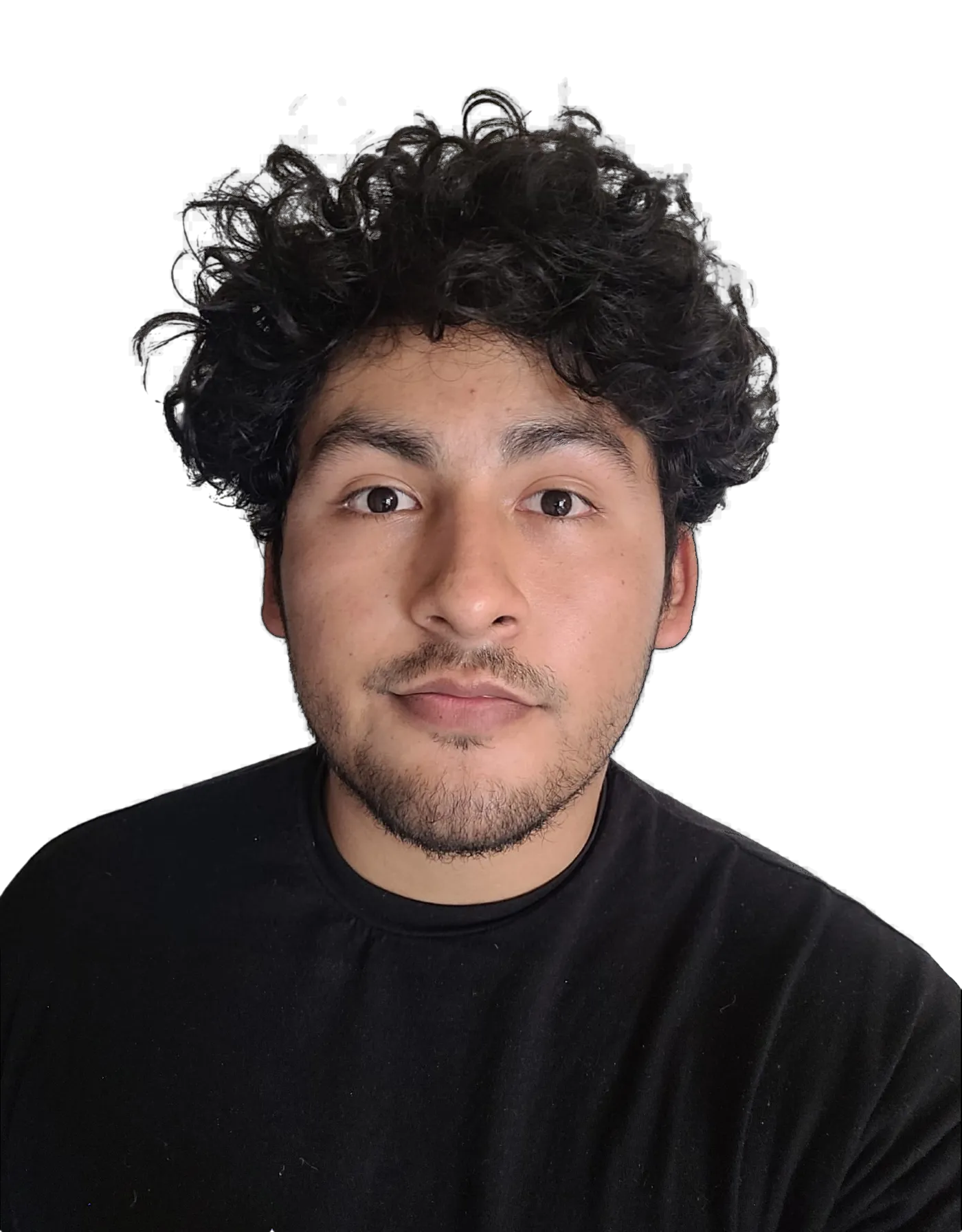
How it started
In mid-2020, in the middle of the pandemic, I was studying law at Universidad Mayor de San Simón. Spending much more time in front of the computer got me curious about the tech world, and one day, thanks to Platzi, I discovered programming. That's when I knew what my real calling was.
From then on I took Freddy Vega's “Never stop learning” very seriously. I learned on Platzi and YouTube: Programación ATS, midudev and many other creators were my teachers. Tutorials, a lot of copy-pasting at first, and whole nights reading the same error until it finally clicked. In 2021 I started Systems Engineering at UDABOL.
Linux, the other big discovery
Around the same time I discovered Linux, and it blew my mind again: realizing the operating system is also something you can learn, take apart and put back together your way. I've tried many distros, but Arch was always special to me: it makes you understand every piece of your system.
Today I daily-drive rOS, my own flavor of Arch that I want to turn into a real distro, and I run a homelab at home with about ten services, looked after by an AI agent. A lot of what I know about servers, networking and automation I learned by breaking and fixing my own system.
From learning to working
With a solid web development foundation I joined WANT Digital Agency in 2022. I started as an intern and ended up on contract: 3+ years building the web and mobile interfaces of products for clients in Bolivia and the US, on a two-person dev team.
For almost all of that time we coded by hand. We only brought AI into our work in my last year there, and coming to it with years of practice made all the difference.
AI as a multiplier
When the boom hit I tried everything: GitHub Copilot, ChatGPT, Gemini, DeepSeek, Groq, local models and, lately, Claude. It has boosted me a lot, and since I come from writing everything by hand, I understand what it generates: I can read it, fix it and maintain it.
Above all, it made me even more eager to keep learning and understand every technology that comes my way.
Rubik's cubes
Away from the screen, my hobbies ended up looking a lot like how I work: obsessing over a problem, trying, failing, improving and, if needed, tearing everything down to rebuild it. Rubik's cubes are the best example.
I started at 12 or 13 with the tutorials from Cuby's YouTube channel, and today I own between 20 and 30 different cubes. I still practice speed-solving on rubik.rossmel.com, a timer I built myself: algorithms, patterns and solving something piece by piece, just like programming.
Football
As a kid, football was my other passion. I went through the youth divisions of Club Wilstermann, until distance, time and school made me stop.
I don't play as often anymore, but I still follow the league and enjoy football from another angle too: its history and the tactics behind every match. Understanding why a team wins isn't that different from understanding why a system works.
Music and podcasts
Music has been a constant thread: as a kid I listened to 80s and 90s classics with my parents and later went through an electronic music phase, but José Madero and PXNDX never stopped playing. These days my taste is pretty open.
And when it's not music, it's a podcast: The Wild Project is, by far, the one I listen to the most — hundreds of hours, according to my own Spotify.
Today
I work independently while finishing my degree: AdvAI, my capstone; Link'u, for a community in Sipe Sipe; SGPG, for my university; and my personal projects. The rule is still the same as in 2020: never stop learning.