Custom build · For a psychology student · 2026 · Private code
GenogramApp
Genograms that draw themselves: type, dictate or photograph your class notes and the app builds the family map.
Screenshots (03)
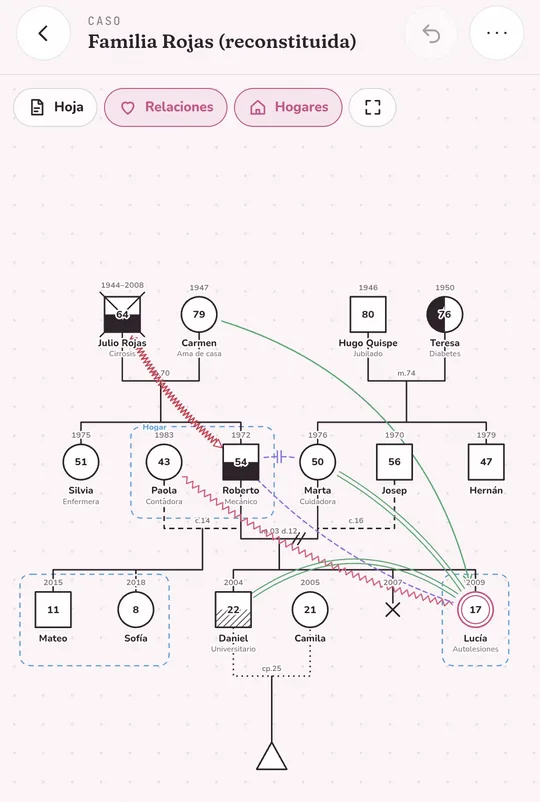
A 17-person genogram on the phone (made-up family): three generations, couples, households and relationships 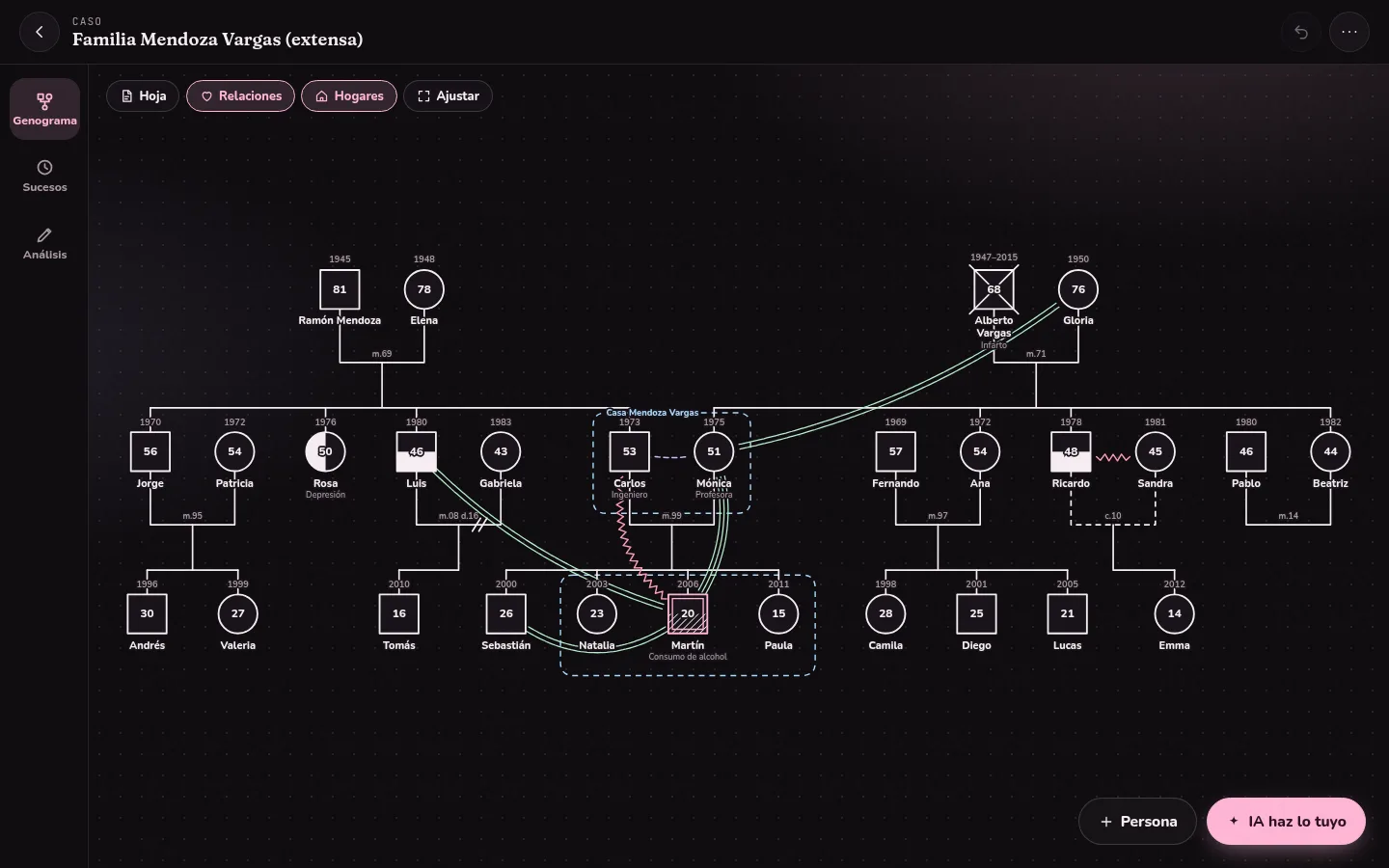
The desktop web version with an extended family of 28 people (made up) 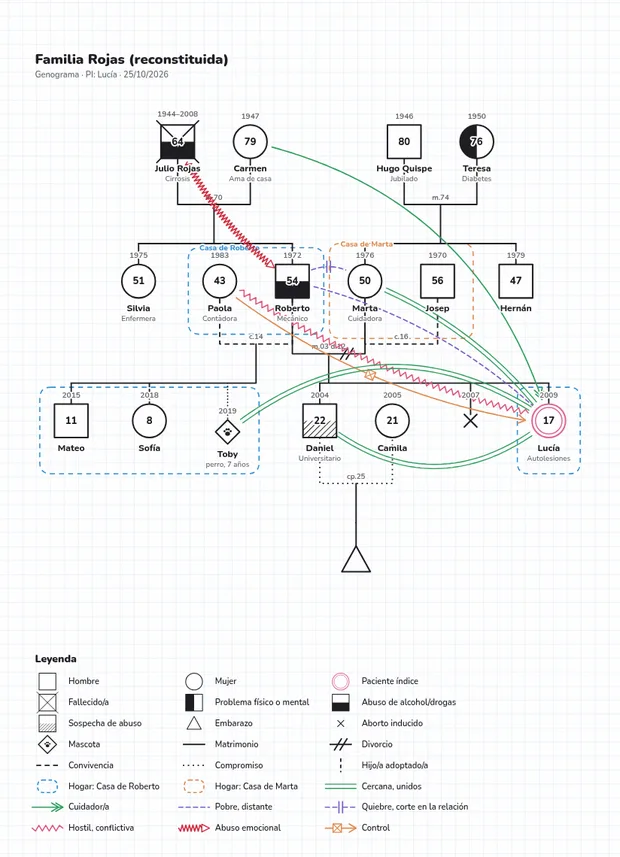
Sheet view for handing in: the genogram with a legend of the symbols in use
My role
Everything: researching the notation, design, the app and the web version, the server and the AI, adjusting each version with feedback from the user.
Stack
- React
- TypeScript
- Vite
- Capacitor
- Android
- SVG
- jsPDF
- Python
- Docker
- Gemini
- Groq
- Tesseract
The problem
A genogram is the family map used in psychology, and drawing it by hand means redoing it every time a new fact shows up: a forgotten sibling, a second marriage. GenogramApp separates the data from the drawing: you edit the data and the genogram rearranges itself. I built it for a psychology student, for her practicum, on Android and the web.
Highlights
- 01Automatic genogram with the McGoldrick–Gerson notation: deceased, index patient, pregnancies, miscarriages, pets, unions, divorces, adoptions and several named, color-coded households, plus 34 relationship types.
- 02AI with human review: type, dictate or photograph the notes; the AI proposes the genogram and shows a preview of what changes before adding anything, and it does not invent facts that are not there.
- 03Android app (Capacitor) and web version with synced cases: the latest change to each case wins and deletions are remembered.
- 04Zero cost and careful with the data: my own server, AI on free tiers with a chain of fallback models (and Tesseract to read photos if everything fails); the AI key never ships inside the app.
- 05Seriously tested: 49 logic tests (including 320 randomly generated families), 62 end-to-end scenarios and a real run: 2 photos of a sheet → 18 people, 18 relationships and 2 households, all correct, in under a minute.
What I learned
- → 01Data first, drawing second: computing the genogram from the data made fixing something a matter of changing a field, not redrawing.
- → 02In Capacitor, Android's back button does not go through the browser history: I had to keep my own stack of open screens.
- → 03Free quotas run out fast (20 requests per day per model): a fallback chain and a preview before applying avoid losing work and keep the AI from inventing things.
Posts about this project
- October 26, 2026 · 6 min readA genogram that draws itselfHow GenogramApp turns people, couples and households into a tidy drawing by generations: the data model, the Sugiyama-style layout and what it still does not solve.↗
- October 26, 2026 · 6 min readAI that does not make up familiesIn GenogramApp the AI reads a case and proposes the genogram, but nothing goes in without a preview of what changes. The prompt, the two passes and the real mistakes it made along the way.↗
- October 26, 2026 · 5 min readThe Android back button in a Capacitor appIn a web app packaged with Capacitor, the Android back button does not close the open sheet: it closes the app. This is how I solved it in GenogramApp with a layer stack tied to the history.↗
Next project
rOS →